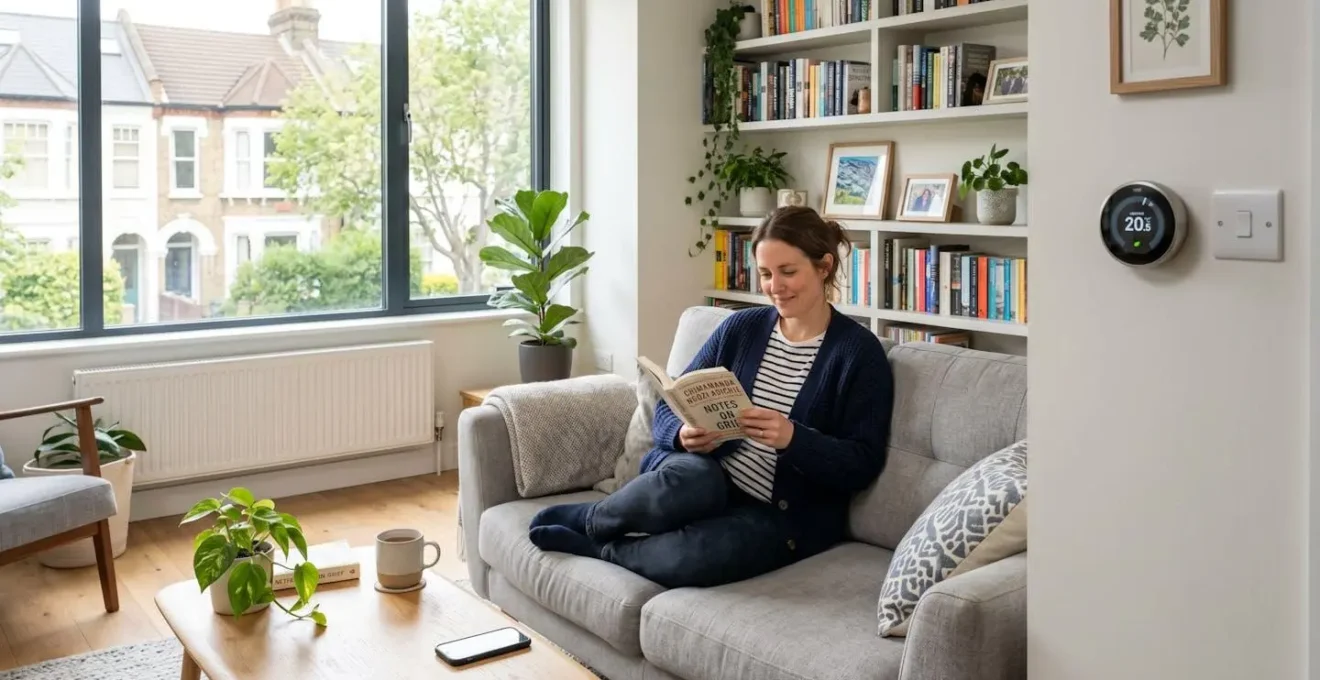
Rising energy costs have transformed home comfort from a simple matter of adjusting the thermostat into a complex balancing act between maintaining pleasant living conditions and managing household expenses. According to the latest Ofgem price cap data, tracked by Parliament, household energy bills remain 35% above pre-crisis levels even after the April 2026 reduction to £1,641 per year for a typical dual-fuel household. Yet the solution doesn’t lie in compromising comfort levels or enduring uncomfortable temperatures throughout your home. The key to achieving both energy efficiency and optimal comfort lies in understanding how advanced technologies and strategic home improvements can work together to maximise performance whilst minimising consumption.
Yes. Modern technologies enable simultaneous improvement of both energy efficiency and home comfort through intelligent climate control, building envelope optimisation, and high-efficiency appliances. Smart thermostats and HVAC zoning reduce energy use by £110 annually on heating controls alone, whilst building envelope retrofits improve comfort by eliminating draughts and cold spots. High-efficiency appliances and LED lighting reduce running costs without any compromise in functionality, and renewable generation paired with storage can cover 50-100% of energy needs depending on system size and consumption patterns.
This transformation doesn’t require wholesale renovation or significant disruption to daily life. The strategic deployment of proven technologies allows homeowners to address the most significant energy losses first, building upon initial improvements to create comprehensive solutions tailored to their property’s unique characteristics and their household’s specific needs.
The current policy landscape in Britain actively supports this transition. The Warm Homes Plan, published in January 2026, represents the largest home energy efficiency programme in British history, with just under £15 billion in capital investment targeting upgrades to 5 million homes by 2030. These schemes provide substantial financial support for technologies ranging from heat pumps to insulation, making comprehensive energy optimisation accessible to households across all income levels whilst maintaining or improving comfort standards throughout the home.
Smart thermostat integration and zoned HVAC temperature control
Modern climate control systems have evolved far beyond the simple on-off functionality of traditional thermostats, offering homeowners unprecedented precision in managing their indoor environment whilst dramatically reducing energy consumption. The integration of smart thermostat technology with zoned HVAC systems represents one of the most effective approaches to achieving both comfort and efficiency. As the Energy Saving Trust‘s heating guidance confirms, installing a programmer, thermostat and thermostatic radiator valves can save £110 annually in Great Britain on energy bills, whilst simply turning down the thermostat by 1°C delivers £90 in annual savings.
The significance of heating control optimisation becomes clear when you consider that heating accounts for approximately 55% of annual household energy spend. For a typical household facing the current Ofgem price cap of £1,641 per year, this represents over £900 annually spent on heating alone. Even modest efficiency improvements in this area generate substantial financial benefits whilst maintaining or improving thermal comfort throughout your home.
Consider Sarah, a homeowner in a 1980s semi-detached property in Reading with annual energy bills of approximately £2,100. After installing a Nest Learning Thermostat and adding thermostatic radiator valves to her existing system, she achieved £145 in annual savings within the first year. The smart thermostat learned her household’s weekday routine—warming the home from 6:30am for morning preparation, reducing temperatures during work hours, then resuming comfortable levels from 5:30pm onwards. Weekend patterns adjusted automatically, and the TRVs prevented energy waste in the spare bedroom and home office during unoccupied periods. The system delivered these savings whilst actually improving comfort, as the automated scheduling eliminated the cold periods that previously occurred when she forgot to adjust the manual programmer.
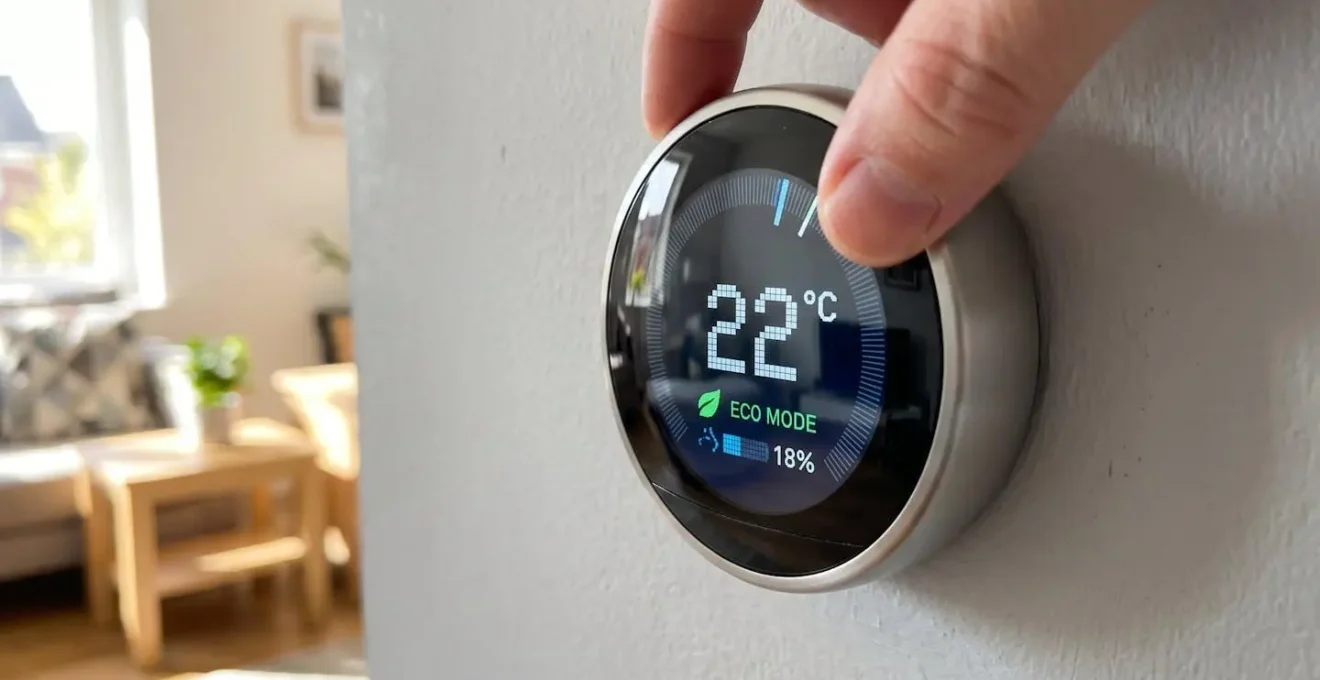
The choice between leading smart thermostat platforms often determines the long-term success of your energy-saving strategy. Nest Learning Thermostats excel at adaptive programming, using machine learning algorithms to understand occupancy patterns and automatically adjust temperatures based on historical usage data. This system typically achieves optimal efficiency within two weeks of installation, gradually fine-tuning its responses to match your household’s unique rhythms. Ecobee SmartThermostats take a different approach, utilising remote sensors throughout the home to create a comprehensive temperature mapping system. This multi-sensor network allows for more precise climate control, particularly beneficial in homes with varying sun exposure or architectural features that create temperature disparities. The Ecobee system can detect which rooms are actually occupied and redirect heating or cooling resources accordingly, preventing energy waste in unused spaces.
Zone-based climate control transforms your HVAC system from a crude whole-house approach into a precision instrument capable of delivering targeted comfort. Motorised dampers installed within existing ductwork can redirect airflow to specific areas based on real-time demand, effectively creating multiple climate zones within a single system. This selective approach can reduce energy consumption by up to 35% compared to traditional single-zone systems according to CIBSE guidance, whilst simultaneously improving comfort in actively used areas. The implementation of multi-zone systems requires careful consideration of your home’s layout and usage patterns. Primary living areas might maintain comfortable temperatures during evening hours, whilst bedrooms remain at energy-saving setback temperatures until occupancy is detected. Guest rooms, storage areas, and infrequently used spaces can operate at minimal conditioning levels, contributing to overall system efficiency without compromising comfort in actively used areas.
For homes requiring year-round climate management, the integration of advanced air conditioning technology with inverter controls and smart zoning capabilities offers comprehensive temperature optimisation across heating and cooling seasons.
This approach proves particularly relevant given the recently announced £2,500 grant extension to air-to-air heat pumps under the Warm Homes Plan, making these dual-function systems financially accessible for households seeking integrated heating and cooling solutions.
Heat pump technology operates most efficiently when maintaining steady, moderate temperature differentials rather than responding to dramatic temperature swings. Advanced scheduling algorithms can anticipate heating and cooling demands based on weather forecasts, time-of-use electricity pricing, and historical performance data. These systems begin conditioning your home during off-peak hours when electricity rates are lowest, whilst avoiding the inefficient operation periods that occur during extreme temperature conditions. Modern heat pump controllers can integrate with utility demand response programmes, temporarily adjusting operation during grid peak periods in exchange for reduced electricity rates. This coordination between your home’s climate system and the broader electrical grid creates substantial cost savings whilst maintaining comfort levels. The financial accessibility of heat pump technology has improved significantly in 2026, with the Warm Homes Plan confirming that the Boiler Upgrade Scheme now offers grants of up to £7500 per property for heat pump installation, available universally without means-testing and extended until 2029/30.
Advanced building envelope retrofitting without major renovations
The building envelope serves as your home’s first line of defence against energy loss, yet many effective improvements can be implemented without the disruption and expense of major renovation projects. Modern retrofit technologies offer sophisticated solutions that can dramatically improve thermal performance through targeted interventions, often achieving results comparable to comprehensive renovations at a fraction of the cost and disruption. This approach proves particularly valuable for Britain’s existing housing stock, where Victorian terraces, Edwardian semi-detached homes, and post-war construction present unique challenges that full-scale renovation would struggle to address economically.
Thermal bridging occurs where structural elements create pathways for heat transfer through otherwise well-insulated walls, often accounting for 20-30% of total heat loss in modern construction according to Building Research Establishment data. Aerogel insulation strips represent a revolutionary approach to addressing these thermal bridges without requiring wall reconstruction. These ultra-thin, highly effective insulation materials can be applied to existing structural elements, providing exceptional thermal resistance in minimal space. The installation of aerogel thermal bridge breaks typically involves accessing wall cavities through small openings, allowing the insulation strips to be positioned around studs, joists, and other structural elements. This approach can reduce heat loss through thermal bridging by up to 80% whilst requiring only minor patching and repainting to restore the wall’s appearance. The technique proves particularly effective in homes with solid wall construction, where traditional cavity wall insulation isn’t applicable.
Windows represent one of the most significant opportunities for thermal improvement, yet complete window replacement often proves prohibitively expensive for many homeowners. Low-emissivity window films offer a cost-effective alternative that can improve window thermal performance by 25-40% at a fraction of replacement cost. These films reflect infrared radiation whilst allowing visible light to pass through, maintaining natural illumination whilst reducing heat transfer. For single-glazed windows common in older British homes, secondary glazing systems provide an intermediate upgrade path that approaches the performance of modern double glazing. These systems involve installing additional glazing panels on the interior side of existing windows, creating an insulating air gap that dramatically improves thermal performance. The installation process typically requires no modifications to the original window structure and can be reversed if necessary, making it suitable for listed buildings or conservation areas where external alterations face restrictions.
Air infiltration can account for 25-40% of heating and cooling energy loss in typical homes, making air sealing one of the most cost-effective efficiency improvements available. Professional blower door testing creates controlled pressure differentials that reveal the location and severity of air leaks throughout the building envelope. This diagnostic approach ensures that sealing efforts focus on the most significant leak sources, maximising the return on investment. Modern air sealing techniques utilise advanced materials such as spray foam, acoustic sealants, and weatherisation tapes that maintain their effectiveness over extended periods. The integration of thermal imaging during blower door testing can reveal hidden air leaks within wall cavities, around electrical penetrations, and at structural joints that would otherwise remain undetected. Expect to invest between £300-800 for professional blower door testing and targeted sealing of a typical three-bedroom semi-detached home.
Prioritising envelope improvements for your home
- If you experience high heating bills in winter and have solid walls:
Priority intervention: External wall insulation or internal insulation with aerogel strips. Solid walls lose heat twice as fast as cavity walls. The Warm Homes Local Grant may fully fund this work for households with income below £36,000 or EPC ratings D-G.
- If you experience draughts and cold spots near windows:
Priority intervention: Air sealing with blower door testing, followed by secondary glazing or low-e window films. This combination typically delivers 30-50% reduction in heat loss through windows at one-third the cost of replacement double glazing.
- If you have cavity walls (post-1920s construction) without existing insulation:
Priority intervention: Cavity wall insulation installation. This represents the single most cost-effective thermal upgrade for appropriate properties, with payback periods typically under 5 years and minimal visual impact or disruption.
- If your loft insulation is less than 270mm deep:
Priority intervention: Top-up loft insulation to current Building Regulations standard of 270mm. This simple upgrade can save £200+ annually on heating bills and qualifies for funding under various schemes including ECO4.
The strategic sequencing of building envelope improvements proves critical to achieving optimal results. Addressing air leakage before adding insulation prevents moisture problems that can develop when water vapour migrates through gaps in the building envelope and condenses within wall cavities. Similarly, upgrading heating controls before implementing major envelope improvements ensures that the heating system can respond appropriately to the home’s improved thermal performance, preventing overheating and maximising comfort.
Many homeowners find that combining multiple envelope improvements in a coordinated programme delivers synergistic benefits that exceed the sum of individual interventions. A comprehensive approach might include loft insulation upgrades, cavity wall insulation, air sealing, and window improvements implemented in logical sequence over one or two years. This staged strategy spreads the financial investment whilst building upon previous improvements to create progressively better thermal performance. The cumulative effect of these interventions often transforms uncomfortable, draughty properties into comfortable, energy-efficient homes whilst preserving the character and appearance that attracted the homeowner to the property initially.
High-performance LED lighting systems and automated controls
Lighting accounts for approximately 12% of residential electricity consumption, presenting substantial opportunities for energy reduction through advanced LED technology and intelligent control systems. Modern LED lighting solutions extend far beyond simple bulb replacement, incorporating sophisticated features such as tunable colour temperature, dimming capabilities, and integration with home automation systems that optimise both energy consumption and occupant comfort.
150 lumens per watt
Luminous efficacy of modern LED systems compared to 10-15 lumens per watt for traditional incandescent bulbs
When combined with occupancy sensors, daylight harvesting controls, and scheduling systems, these high-efficiency light sources can reduce lighting energy consumption by 75-85% compared to conventional lighting installations. Contemporary LED systems achieve this dramatic improvement through fundamental advances in semiconductor technology that convert electricity to visible light with minimal waste heat generation. Automated lighting controls utilise advanced sensors to monitor ambient light levels and occupancy patterns, adjusting artificial lighting output to maintain optimal illumination whilst minimising unnecessary energy consumption. These systems can differentiate between natural daylight and artificial light sources, gradually dimming or brightening fixtures to compensate for changing conditions throughout the day. The integration of circadian lighting principles can also support occupant health and well-being by providing appropriate colour temperatures that align with natural biological rhythms.
Smart lighting networks enable granular control over individual fixtures or groups of lights, allowing homeowners to create custom scenes optimised for specific activities or times of day. Task-oriented lighting strategies can focus illumination where it’s needed most, reducing overall lighting loads whilst improving visual comfort. Motion-activated pathway lighting and security illumination can provide safety benefits without continuous energy consumption, activating only when required and automatically deactivating after predetermined periods.
Energy recovery ventilation and indoor air quality management
Indoor air quality requirements often conflict with energy efficiency goals, as traditional ventilation approaches involve exhausting conditioned air and replacing it with unconditioned outdoor air that requires heating or cooling. Energy recovery ventilation (ERV) and heat recovery ventilation (HRV) systems resolve this conflict by capturing thermal energy from exhaust air and transferring it to incoming fresh air, maintaining indoor air quality whilst dramatically reducing the energy penalty associated with ventilation.
Modern ERV systems can recover 70-80% of the thermal energy from exhaust air streams, effectively reducing the heating and cooling loads associated with ventilation by similar percentages. These systems utilise sophisticated heat exchanger cores that separate incoming and outgoing air streams whilst facilitating thermal transfer through specialised membranes or metallic surfaces. The most advanced systems incorporate moisture recovery capabilities, managing humidity levels to prevent condensation issues whilst maintaining optimal indoor air quality. The integration of ERV systems with existing HVAC equipment requires careful coordination to ensure proper airflow balancing and system compatibility. Variable-speed fans and intelligent controls can modulate ventilation rates based on occupancy levels, indoor air quality measurements, and outdoor conditions. This responsive approach ensures adequate fresh air delivery during occupied periods whilst reducing energy consumption when buildings are unoccupied or when outdoor air quality conditions are unfavourable.
Advanced heat exchanger technologies incorporate materials and designs that maximise thermal transfer efficiency whilst minimising pressure drops that can increase fan energy consumption. Counter-flow heat exchangers achieve the highest efficiency levels by maintaining optimal temperature differentials throughout the heat transfer process, whilst crossflow designs offer simplified installation and maintenance characteristics that may be preferable in certain applications. Professional installation and commissioning of ERV systems ensures optimal performance and longevity, with properly configured systems providing decades of efficient operation with minimal maintenance requirements beyond periodic filter replacement.
Smart appliance load management and peak shaving strategies
Household appliances collectively account for approximately 30% of residential electricity consumption, making them prime targets for efficiency improvements and intelligent load management strategies. Modern smart appliances incorporate advanced sensors, connectivity features, and adaptive algorithms that optimise energy consumption based on utility pricing signals, grid conditions, and user preferences. The strategic replacement of inefficient appliances combined with intelligent scheduling can deliver substantial energy savings without any compromise in functionality or convenience.
Water heating represents the second-largest energy expense in most homes, consuming 15-20% of total household electricity. Heat pump water heaters achieve coefficient of performance (COP) values of 2.5-3.5, meaning they produce 2.5-3.5 units of heat energy for every unit of electricity consumed. This represents a dramatic improvement over conventional electric resistance water heaters that achieve COP values of approximately 0.95. The Warm Homes Plan’s extension of the Boiler Upgrade Scheme to cover heat pump water heaters with grants up to £7,500 has significantly improved the financial viability of this technology for British households. The following comparison illustrates the long-term economics for a typical four-person household consuming approximately 4,000 litres of hot water annually.
Data compiled and updated in January 2026 based on Ofgem price cap unit rates and manufacturer efficiency specifications.
| Technology | Efficiency (COP) | Annual running cost | Installation cost | Carbon intensity |
|---|---|---|---|---|
| Gas combi boiler | 0.85-0.90 | £200-280 | £2,000-3,500 | Medium-High |
| Electric immersion | ~0.95 | £450-600 | £300-800 | Medium (grid-dependent) |
| Heat pump water heater | 2.5-3.5 | £180-250 | £2,500-4,000 (before £7,500 BUS grant) | Low (grid-dependent) |
Energy Star certified heat pump water heaters incorporate sophisticated controls that can shift operation to off-peak periods when electricity rates are lowest, whilst maintaining adequate hot water availability throughout the day. These systems often include intelligent scheduling features that learn household hot water usage patterns and optimise heating cycles accordingly, ensuring comfort whilst maximising energy efficiency.
Induction cooking technology represents a fundamental advancement in kitchen energy efficiency, achieving thermal transfer efficiencies of 85-90% compared to 40-45% for conventional gas ranges and 65-70% for standard electric cooktops. The precise temperature control and rapid response characteristics of induction systems also reduce cooking times, further decreasing energy consumption whilst improving culinary results. Modern induction cooking systems incorporate power management features that can integrate with home energy management systems, modulating power consumption during peak demand periods or when renewable energy generation is limited. The electromagnetic heating principle used in induction cooking delivers heat directly to cookware whilst keeping surrounding surfaces cool, improving kitchen comfort during summer months and reducing air conditioning loads.
Variable speed pool pumps represent another significant opportunity for appliance-related energy savings in homes with swimming pools. Traditional single-speed pool pumps operate at maximum capacity regardless of actual filtration needs, consuming substantial electricity unnecessarily. Variable speed models equipped with permanent magnet motors can reduce pool pump energy consumption by 50-75% by matching pump speed to actual circulation and filtration requirements. These pumps operate at lower speeds for routine circulation, ramping up to higher speeds only when necessary for cleaning or chemical distribution. The energy savings typically deliver payback periods of 2-4 years, with the pumps often qualifying for utility rebates that further improve the financial case for upgrading.
Phantom loads from electronics and appliances in standby mode can account for 5-10% of household electricity consumption, representing potentially £80-160 in annual energy costs for typical homes facing current electricity rates. Smart power strips equipped with phantom load detection capabilities can identify and eliminate these parasitic loads automatically, cutting power to devices that are not actively in use. Advanced smart power strips incorporate occupancy sensors, scheduling functions, and remote control capabilities that provide granular control over connected devices. These systems can learn usage patterns for different electronics and create customised power management strategies that maintain functionality whilst eliminating unnecessary energy consumption during unoccupied periods. The integration with whole-home energy management platforms allows coordinated load shifting to take advantage of time-of-use electricity tariffs, which are becoming increasingly common as utilities seek to manage peak demand.
Renewable energy micro-generation and storage integration
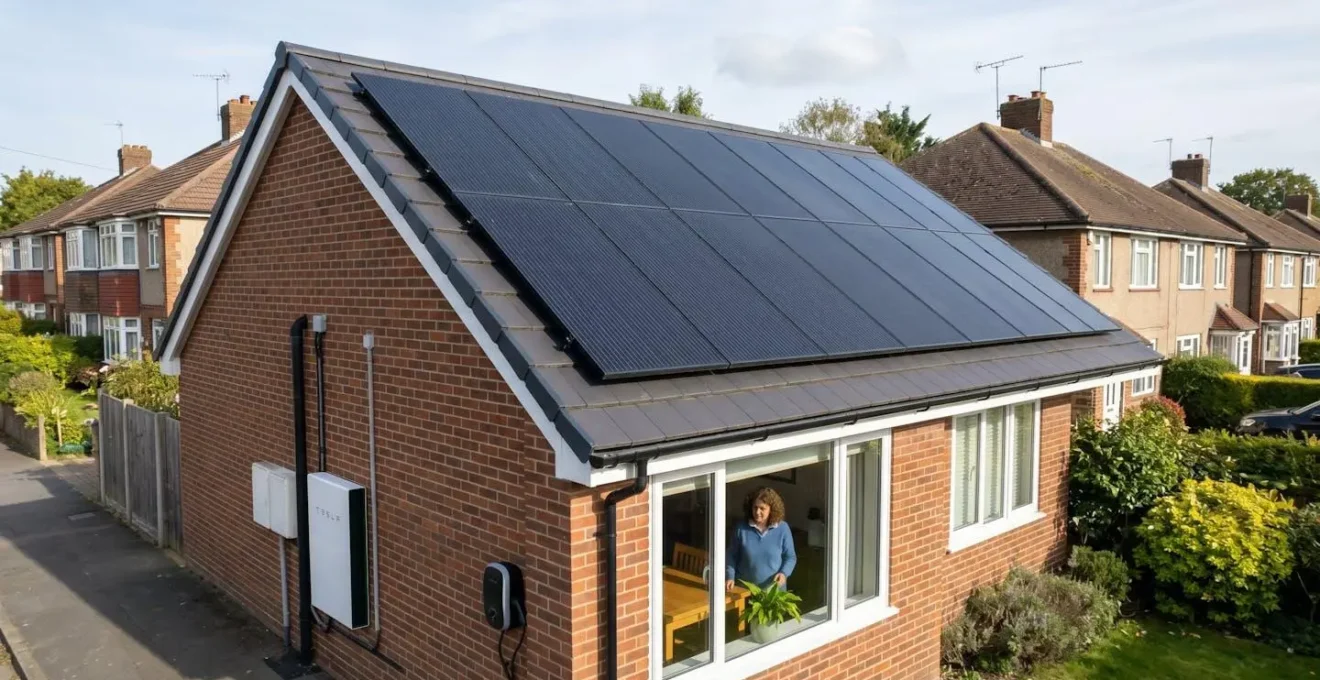
Renewable energy micro-generation systems provide on-site electricity production that can significantly reduce dependence on grid-supplied power whilst supporting enhanced comfort system operation. Modern residential solar photovoltaic systems can be integrated with battery storage and intelligent energy management systems to create resilient, efficient home energy solutions that align renewable generation with household consumption patterns.
Solar photovoltaic systems sized appropriately for household energy consumption can achieve substantial grid independence when combined with comprehensive efficiency improvements and energy storage systems. Advanced solar inverters incorporate grid-tie capabilities that allow excess generation to be fed back into the utility grid under the Smart Export Guarantee (SEG), whilst battery storage systems can shift renewable energy production to match consumption patterns and provide backup power during grid outages. The integration of renewable energy systems with smart home technologies enables sophisticated energy management strategies that prioritise renewable energy utilisation for comfort systems. Heat pump operation, water heating, and electric vehicle charging can be scheduled to coincide with peak renewable energy production periods, reducing grid electricity consumption whilst maintaining comfort levels. This approach proves particularly effective during spring and autumn months when solar generation capacity often exceeds immediate household demand.
Micro-generation systems require careful sizing and integration to achieve optimal performance and economic benefits. Professional system design considers local weather patterns, utility interconnection requirements, and household energy consumption profiles to create solutions that maximise renewable energy utilisation whilst ensuring reliable comfort system operation throughout all seasons and weather conditions. The Warm Homes Plan’s Future Homes Standard, implemented in early 2026, now mandates that new homes include solar panels and low-carbon heating as standard, accelerating the normalisation of residential renewable energy systems.
Battery storage systems paired with renewable generation provide additional benefits beyond simple energy storage, including grid support services, demand response participation, and emergency backup power capabilities. These systems can automatically manage energy flows to optimise economic benefits whilst maintaining comfort system functionality, creating truly intelligent energy ecosystems that adapt to changing conditions and requirements. The combination of renewable energy micro-generation with comprehensive efficiency improvements creates synergistic benefits that can approach net-zero energy performance, where homes produce nearly as much energy as they consume over the course of a year.
The evidence from current UK households demonstrates that combining multiple interventions generates results far exceeding the sum of individual improvements. Homes that implement smart heating controls alongside building envelope upgrades and high-efficiency appliances typically achieve 40-60% reductions in energy consumption according to industry estimates compared to pre-improvement baselines, whilst simultaneously reporting improved thermal comfort and reduced temperature variability throughout living spaces. For comprehensive guidance on implementing a whole-home transformation strategy that coordinates these improvements for maximum impact, the energy-efficient home transformation framework provides detailed planning tools and prioritisation logic tailored to different property types and budget constraints.
The key insight from successful implementations is that staged improvements, beginning with low-cost high-impact interventions like smart controls and LED lighting, build momentum and funding capability for larger projects such as heat pumps and solar PV systems. Check your current EPC rating via the government’s EPC register and identify the specific improvements recommended for your property. Assess your eligibility for the Warm Homes Local Grant (income ≤£36,000 or EPC D-G) or universal Boiler Upgrade Scheme (£7,500 for heat pumps). Installing a smart thermostat and thermostatic radiator valves as a first step delivers £110 annual savings with minimal upfront cost. Replace all incandescent and halogen bulbs with LED equivalents, prioritising the most frequently used fixtures first. Request quotes from at least three MCS-certified installers for any major improvements (heat pumps, solar PV, insulation) to ensure competitive pricing and access to available grant funding.
Practical concerns about optimising home energy efficiency
Will a smart thermostat actually save money if I’m already careful about heating?
Yes, even for energy-conscious households. Smart thermostats optimise heating schedules with greater precision than manual control, detect occupancy automatically to avoid heating empty rooms, and can integrate with weather forecasts to anticipate heating needs. The Energy Saving Trust confirms that installing a full heating control package (programmer, thermostat, and thermostatic radiator valves) saves £110 annually, whilst simply turning down the thermostat by 1°C delivers £90 in savings. These benefits apply even to households that already practise careful manual control, as the automation eliminates the inevitable lapses in attention that occur with manual management.
Are heat pumps suitable for older British homes with existing radiators?
Modern heat pumps can work with existing radiator systems, though performance is optimal with larger radiators or underfloor heating. A professional heat loss calculation determines whether your current system is compatible or requires radiator upgrades. Many Victorian and Edwardian homes have been successfully retrofitted with heat pumps, particularly when combined with building envelope improvements that reduce overall heating demand. The Warm Homes Plan’s Boiler Upgrade Scheme offers grants of up to £7,500 for heat pump installation, making professional assessment and any necessary modifications financially accessible.
How long does it take to recoup the investment in energy efficiency improvements?
Payback periods vary significantly by intervention type. LED lighting and smart thermostats typically pay back within 1-3 years. Building envelope improvements such as cavity wall insulation range from 5-8 years, whilst loft insulation can pay back in under 5 years. Heat pump systems currently average 8-12 years for full cost recovery, though the £7,500 Boiler Upgrade Scheme grant dramatically improves this timeline. Solar PV systems average 10-14 years depending on generation capacity and consumption patterns. However, these improvements also increase property value through improved EPC ratings, with homes rated EPC Band C or above commanding price premiums in the current market.
Can I install these systems myself or do I need professionals?
Smart thermostats and LED lighting can often be DIY installations if you’re confident with basic electrical work, though professional installation ensures optimal placement and configuration. Heat pumps, HVAC zoning, building envelope modifications, and solar PV require professional installation to ensure safety, performance, and warranty validity. Many improvements also require Building Regulations compliance certification, which only registered installers can provide. The Warm Homes Plan schemes specifically require installation by MCS-certified (Microgeneration Certification Scheme) or TrustMark-registered installers to qualify for grant funding.
Will these technologies become outdated quickly given how fast the sector evolves?
Core technologies like heat pumps, quality insulation, and solar PV have long operational lifespans (15-25+ years) and proven track records. Whilst control systems and smart features evolve, most modern systems use open protocols allowing upgrades without replacing entire installations. Focus on proven, well-supported technologies rather than bleeding-edge innovations. Building envelope improvements remain effective indefinitely regardless of technological advances elsewhere, whilst established brands typically provide firmware updates and backwards compatibility for smart controls for at least 5-10 years after purchase.